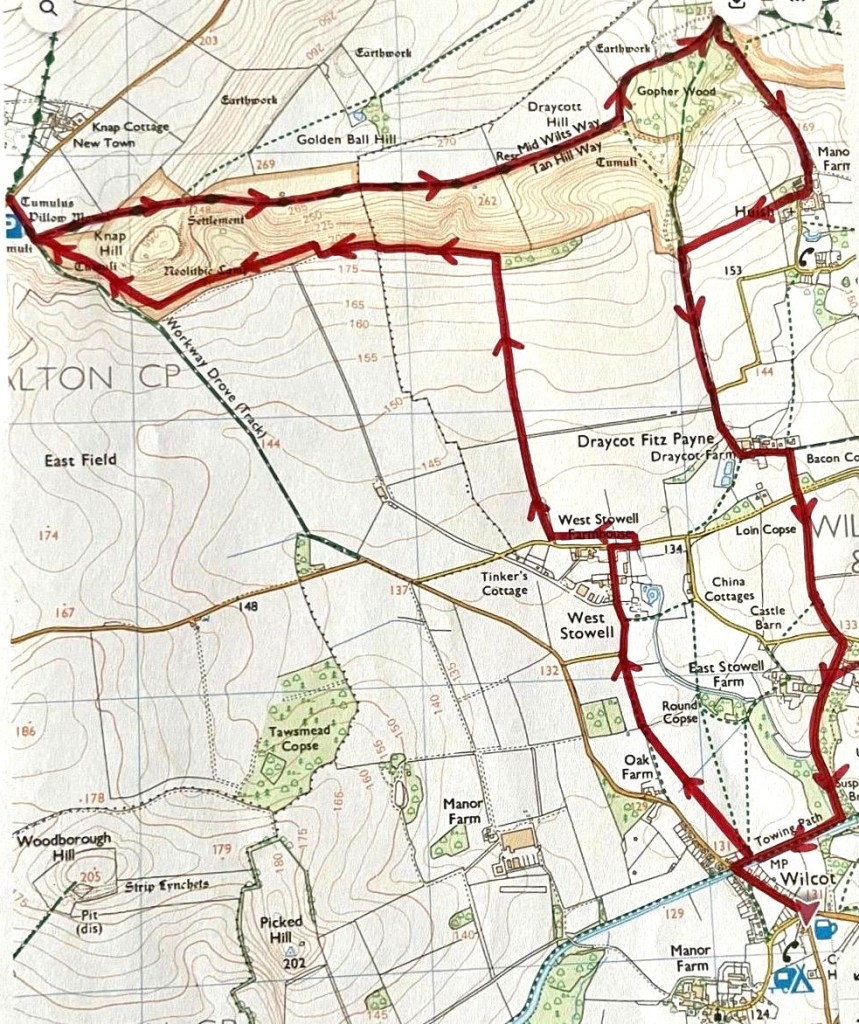
Wilcot — Where the Walk Begins
The morning begins in Wilcot, where the light always seems to arrive gently…
The walk opens in a village with deep roots, its name likely meaning Willow Cottage or Willow Settlement. St Mary’s Church glows in the early sun, its 12th‑century stone setting the tone for a journey through time.
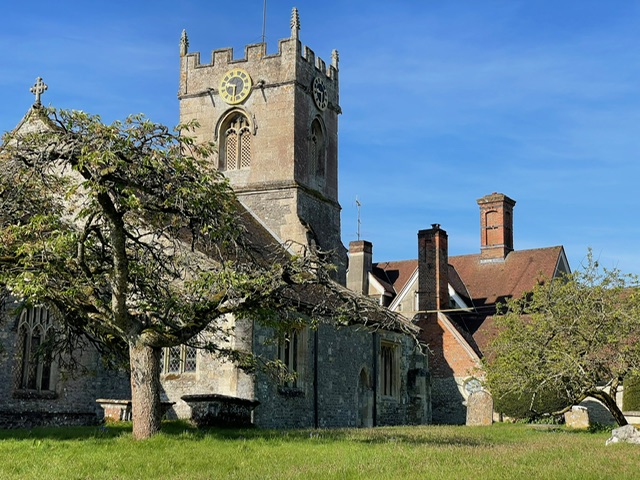
St Mary’s Church glows in the early sun, its 12th‑century stone setting the tone for a journey through time.
Before setting off, someone reminds the group:
“The distance of this walk is what some of our students used to walk to get to school before Afrikaya was built.”
Across the Fields to West Stowell
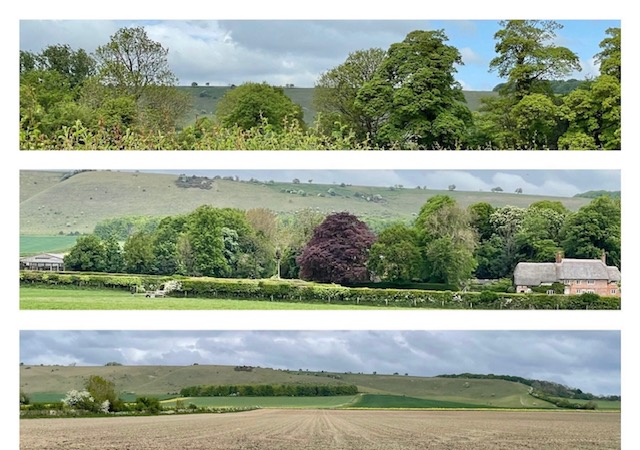
Leaving Wilcot feels like stepping out of the present. Dew‑damp grass, quiet fields, and then the tiny hamlet of West Stowell — “so small it seems almost shy.”
West Stowell House
West Stowell House is an 18th‑century (and possibly earlier) country house, later extended in the 1930s by diplomat Sir Eric Phipps. Converted into multiple houses in 1977, forming part of a larger estate with shared grounds.
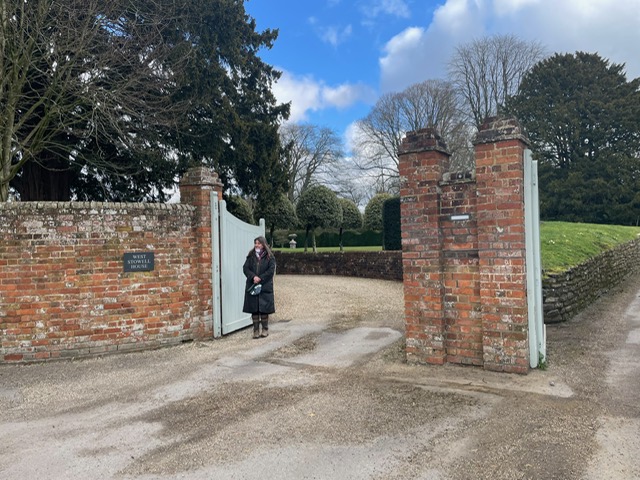
Human activity here stretches back to the Neolithic. The hamlet remains a classic Wiltshire downland settlement: ancient, agricultural, and largely unchanged.
The Climb to Knap Hill
The landscape shifts from pastoral to prehistoric.
“Time folds here. Every step feels like walking across the pages of a book written in chalk.”
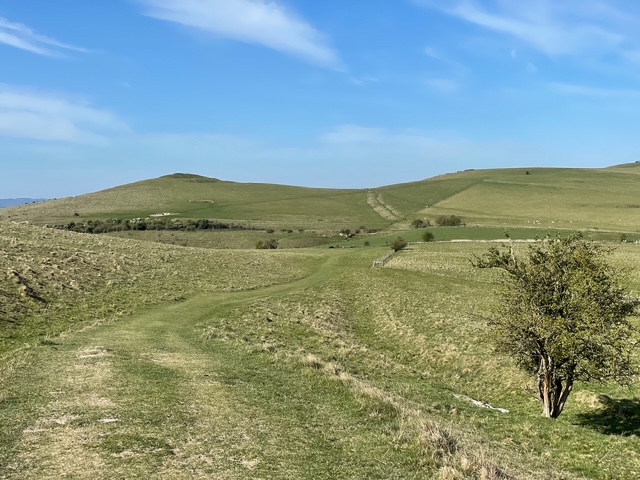
Knap Hill is older than Stonehenge — radiocarbon dated to 3530–3375 BC. Beneath the turf lie traces of a Romano‑British settlement, a medieval hearth, 17th‑century pottery, and even an Anglo‑Saxon sword.
Along the Ridge to Gopher Wood
This ridge is one of the richest stretches of the Pewsey Downs. Chalk grassland supports rare plants — burnt‑tip orchids, early gentian, frog orchids — and 28 butterfly species! Ancient earthworks and long barrows lie beneath your feet.
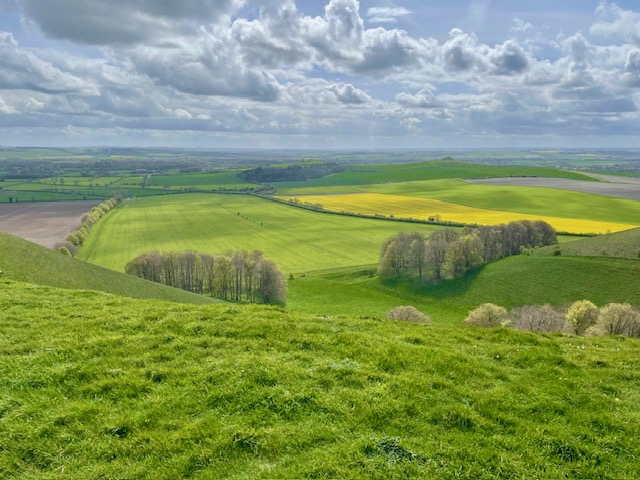
The Vale of Pewsey opens wide beside you. Silence becomes part of the experience.
Gopher Wood — A Fairytale on the Downs
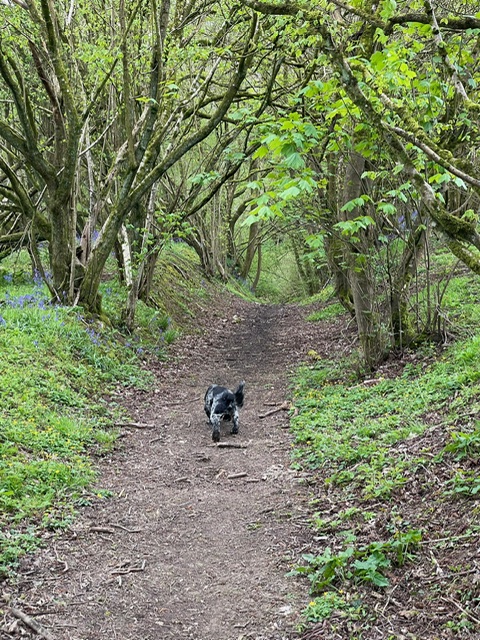
“Bluebells pool like spilled paint across the ground…”
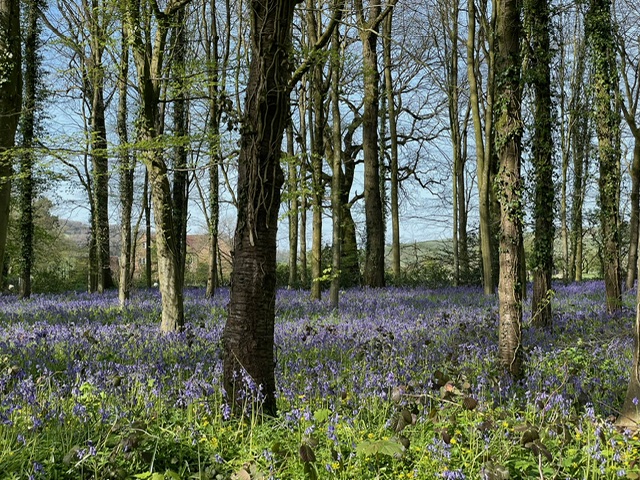
A small but atmospheric woodland perched improbably on the crest of the downs. Local lore links it to medieval forest remnants; the name may come from dialect words for thickets or coppice.
There is only one narrow path through it — a natural bottleneck that feels like a secret.
Eastward Toward Huish Hill
Leaving Gopher Wood, the path immediately crosses prehistoric linear earthworks — long banks and ditches from the Late Bronze Age to Early Iron Age. Nearby lie the remains of the deserted medieval village of Shaw, with visible platforms and hollow ways.
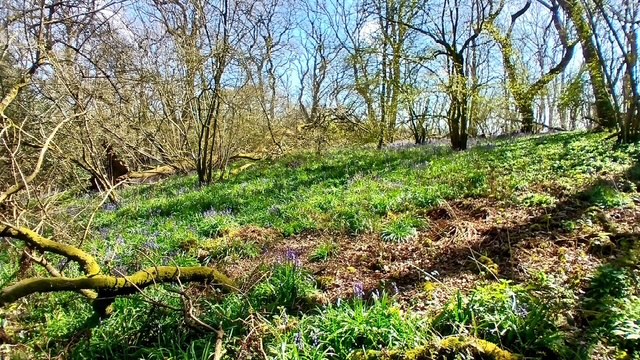
This landscape is quieter than Knap Hill but no less deep: at least 3,000 years of human presence lie beneath the grass.
Huish — A Quiet Churchyard with a Hollywood Echo
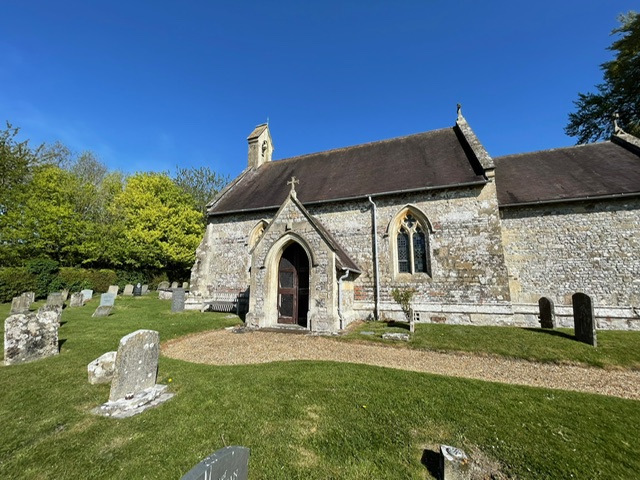
St Nicholas Church at Huish holds a tender, modern story.
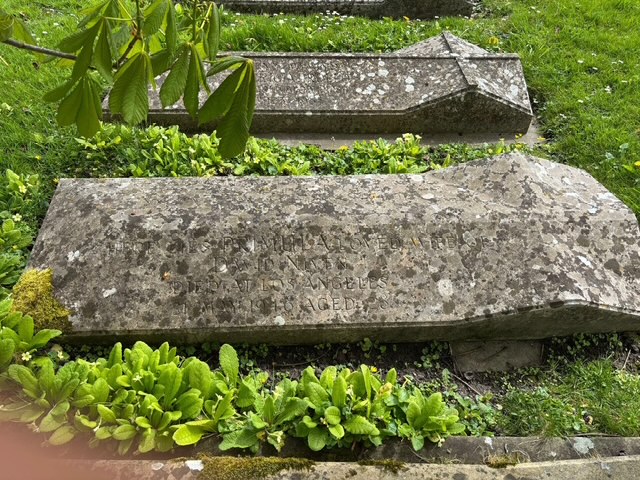
“Here Lies PRIMULA Loved Wife of David Niven
Died At Los Angeles 21 May 1946 Aged 28”
Her life bridged Wiltshire and Hollywood; her death was sudden and tragic, all because of a game of hide and seek!
Through East Stowell
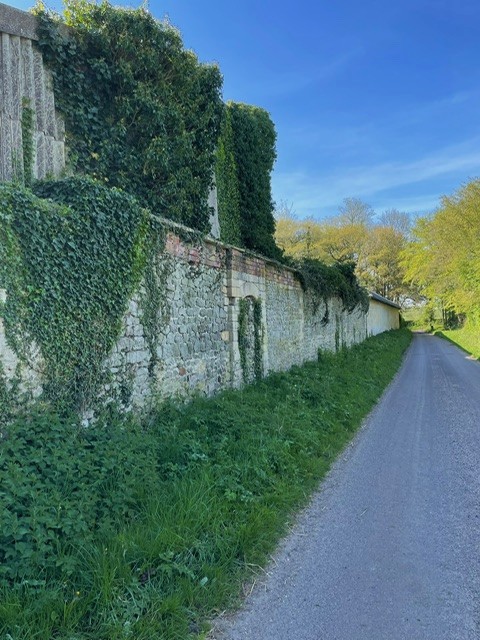
The descent leads to East Stowell, a tiny hamlet with Stowell Park House — ashlar limestone, Roman Doric verandah, and early 19th‑century elegance. The settlement sits lightly on the land, careful not to disturb the history beneath it.
The Kennet & Avon Canal
The walk enters the world of Georgian engineering. Completed in 1810, the canal once carried coal, timber, grain, and stone between Bristol and London.
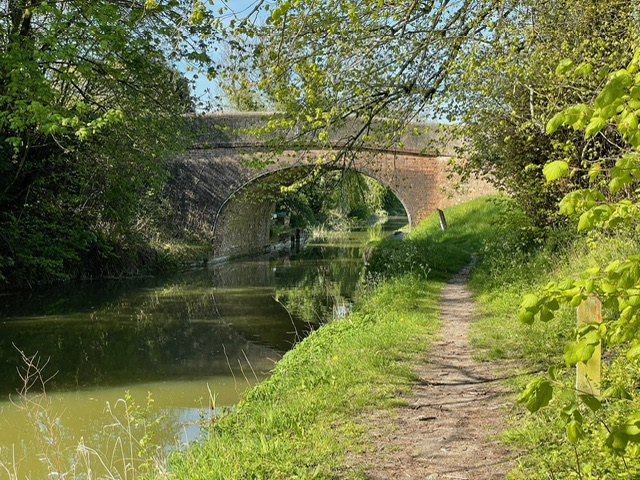
“Kingfishers flash like blue sparks along the water.”
The modern world returns gently.
A Walk Through Time
Twelve kilometres, thousands of years.
This circular walk threads together:
• Neolithic enclosures
• Bronze and Iron Age earthworks
• Medieval woodland and villages
• Georgian engineering
• Timeless Wiltshire landscapes
You return changed — not dramatically, but gently, “the way Wiltshire itself changes.”
A Story Told in Footsteps…. By Geoff Miles, May 2026 ©
 AFRIKAYA - Gambian childrens' charity based in Pewsey, Wiltshire, UK.